Connecting the Unconnected
In the rapidly evolving landscape of the Internet of Things (IoT), the Global System for Mobile Communications (GSM) module serves as a critical bridge between physical hardware and the global cellular network. While Wi-Fi and Bluetooth provide localized connectivity, GSM modules empower machines to communicate across vast distances where traditional internet infrastructure may be absent. By acting as a specialized radio transceiver, these modules allow microcontrollers to “talk” through Short Message Service (SMS), voice calls, and GPRS data packets. This foundational technology has transformed isolated sensors into interconnected nodes capable of reporting status updates from virtually anywhere on Earth where a cellular signal exists.
How a GSM Module Works
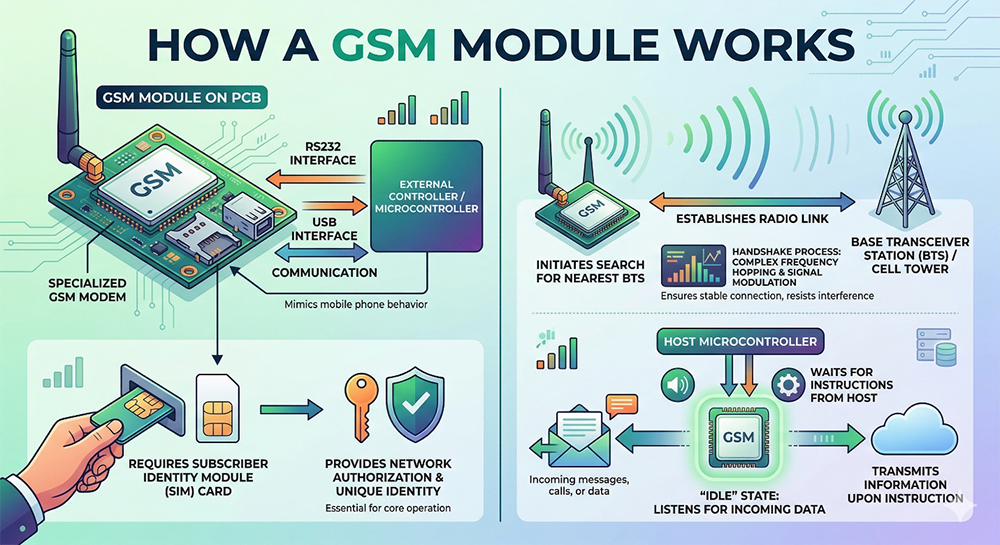
A GSM module is essentially a specialized GSM modem integrated onto a Printed Circuit Board (PCB) with various interfaces like RS232 or USB to facilitate communication with external controllers. At its core, the module operates by mimicking the behavior of a mobile phone, requiring a “Subscriber Identity Module” (SIM) card to provide network authorization and a unique identity. Once powered, the module’s internal processor initiates a search for the nearest Base Transceiver Station (BTS) or “cell tower” to establish a radio link. This handshake process involves complex frequency hopping and signal modulation to ensure a stable connection even in high-interference environments. Upon successful registration with the network, the module remains in an “idle” state, listening for incoming data or waiting for instructions from the host microcontroller to transmit information.
Key Components and Hardware Interface
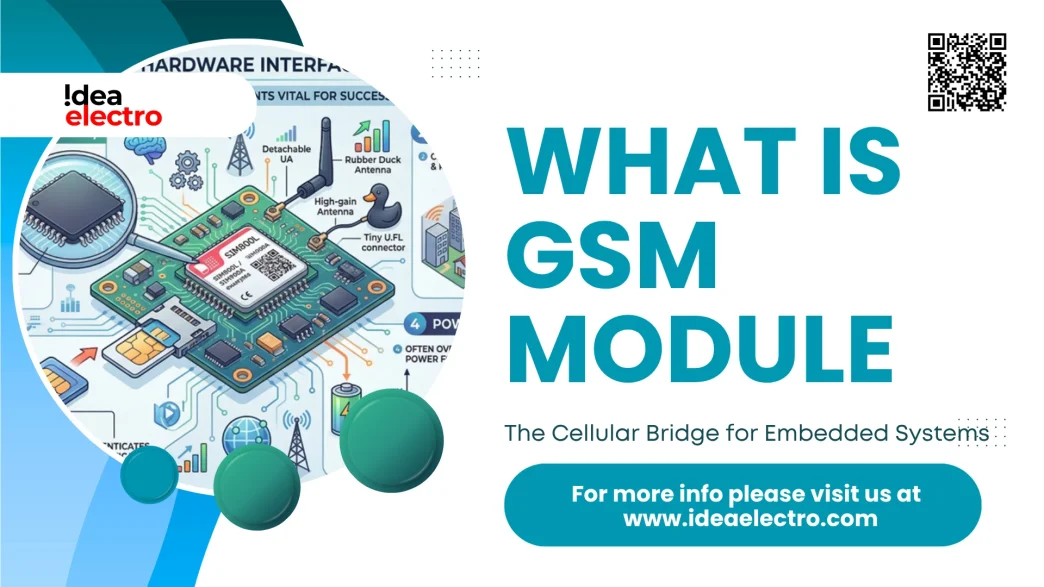
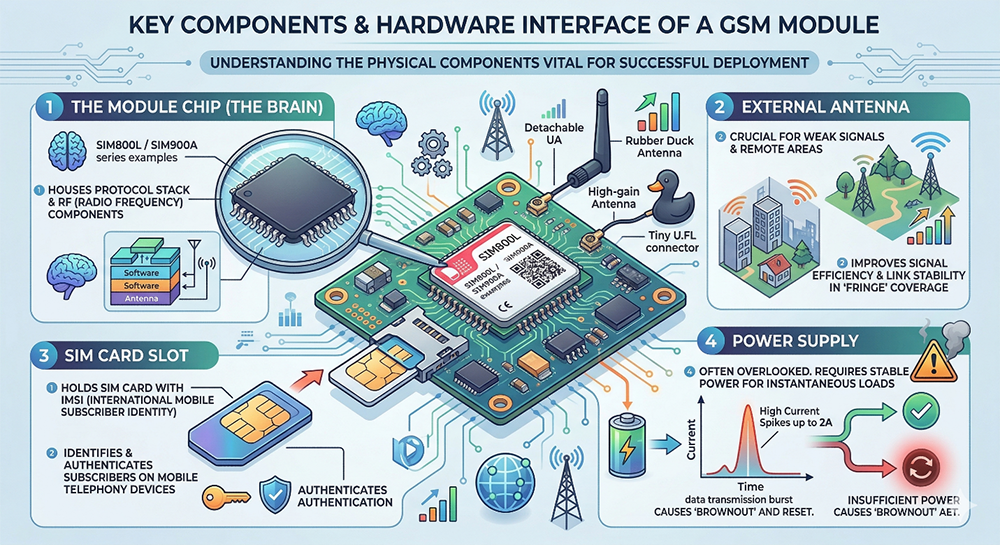
The architecture of a GSM module is designed for reliability and ease of integration into larger electronic circuits. Understanding the physical components is vital for successful hardware deployment.
- The Module Chip: This is the “brain” of the unit, often represented by popular series such as the SIM800L or SIM900A. These chips house the protocol stack and RF (Radio Frequency) components necessary for cellular communication.
- External Antenna: Because cellular signals can be weak inside buildings or in remote areas, an external antenna is crucial for signal reception and transmission efficiency. High-gain antennas are often used to maintain link stability in “fringe” coverage areas.
- SIM Card Slot: This holds the SIM card, which contains the International Mobile Subscriber Identity (IMSI) and the related key used to identify and authenticate subscribers on mobile telephony devices.
- Power Supply: One of the most overlooked aspects of GSM hardware design is the power requirement. During data transmission bursts, a GSM module can draw high current spikes of up to 2A. If the power supply cannot handle these instantaneous loads, the module will suffer a “brownout” and reset.
Common Pinout Reference
| Pin Name | Function | Description |
| VCC | Power Input | Typically, 3.4V to 4.4V (highly sensitive to voltage drops). |
| GND | Ground | Common ground for the circuit. |
| TX | Transmit | Serial data output to the microcontroller. |
| RX | Receive | Serial data input from the microcontroller. |
| RST | Reset | Used to hard-reset the module via a logic signal. |
Communication via AT Commands
Communication between a microcontroller (like an Arduino or Raspberry Pi) and a GSM module is handled through “Attention” (AT) commands. These are a series of short text strings that the module interprets to perform specific tasks. This standardized command set, originally developed for Hayes modems in the 1980s, remains the industry standard for controlling cellular modems today. By sending these strings over a Serial/UART interface, a developer can programmatically control every aspect of the module’s behavior.
- AT: Used to check if the module is responsive. The module should return “OK”.
- ATD [number]; Initiates a voice call to the specified phone number.
- AT+CMGS=”[number]”: The command used to begin the process of sending an SMS message.
- AT+HTTP: A prefix used to initiate GPRS data sessions for sending data to web servers via HTTP.
Popular GSM Modules in the Market
Choosing the right module depends on the geographical location of the project and the required data speeds. While 2G modules are still popular for low-cost hobbyist projects, professional applications are shifting toward LTE-enabled hardware.
| Module Model | Network Type | Best For |
| SIM800L | 2G (GSM/GPRS) | Small, low-cost DIY projects; very compact. |
| SIM900A | 2G (Dual-band) | Large-scale hobbyist use, primarily in Asian markets. |
| SIM7600 Series | 4G (LTE) | High-speed data, future-proof industrial IoT. |
The SIM800L remains a staple in the maker community due to its incredibly small footprint and affordability, though its reliance on 2G limits its longevity. In contrast, the SIM7600 series offers a robust path forward, supporting 4G networks and providing the bandwidth necessary for more complex data-heavy applications.
Real-World Applications
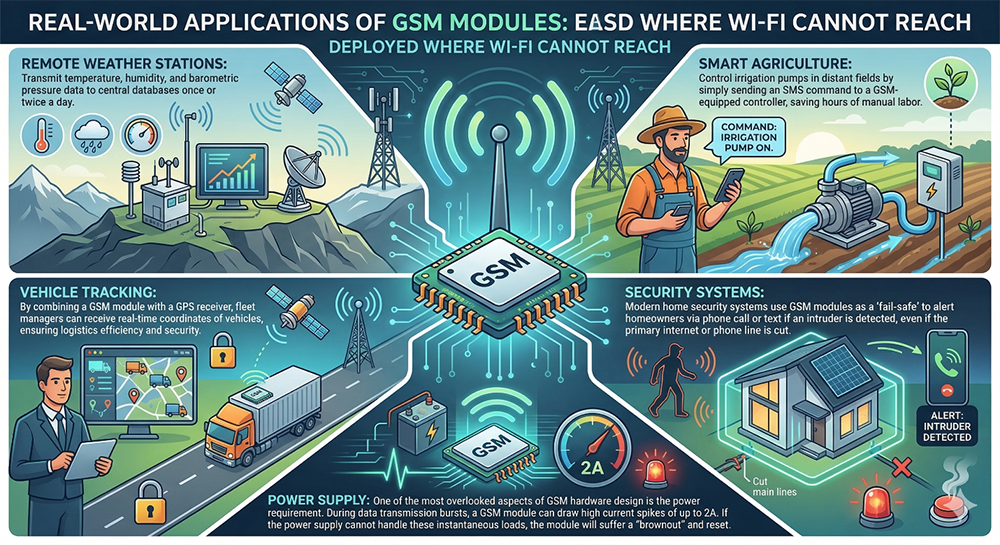
The versatility of GSM modules allows them to be deployed in environments where Wi-Fi simply cannot reach.
- Remote Weather Stations: In the wilderness, researchers use GSM modules to transmit temperature, humidity, and barometric pressure data to central databases once or twice a day.
- Smart Agriculture: Farmers can control irrigation pumps in distant fields by simply sending an SMS command to a GSM-equipped controller, saving hours of manual labor.
- Vehicle Tracking: By combining a GSM module with a GPS receiver, fleet managers can receive real-time coordinates of vehicles, ensuring logistics efficiency and security.
- Security Systems: Modern home security systems use GSM modules as a “fail-safe” to alert homeowners via phone call or text if an intruder is detected, even if the primary internet or phone line is cut.
Challenges: 2G Sunset and Power Issues
A significant “pro-tip” for any engineer is to be aware of the “2G Sunset.” Many countries, including the US, Australia, and parts of Europe, are decommissioning 2G networks to reallocate spectrum for 5G. This means older modules like the SIM800L may lose connectivity entirely in these regions, making 4G-compatible (Cat-M1 or NB-IoT) modules a necessity for new builds. Additionally, power stability remains the primary cause of failure in GSM projects. Designers must use high-quality capacitors (1000uF or higher) near the VCC pin to buffer the current spikes and prevent the module from rebooting during transmission attempts.
Conclusion
GSM modules remain a cornerstone of remote communication in the electronics world. Their ability to leverage existing cellular infrastructure makes them indispensable for IoT and remote sensing. For those new to the field, starting with a basic SIM800L project—such as a “texting thermometer”—is an excellent way to master the logic of AT commands and cellular interfacing before moving on to advanced 4G/LTE industrial applications.