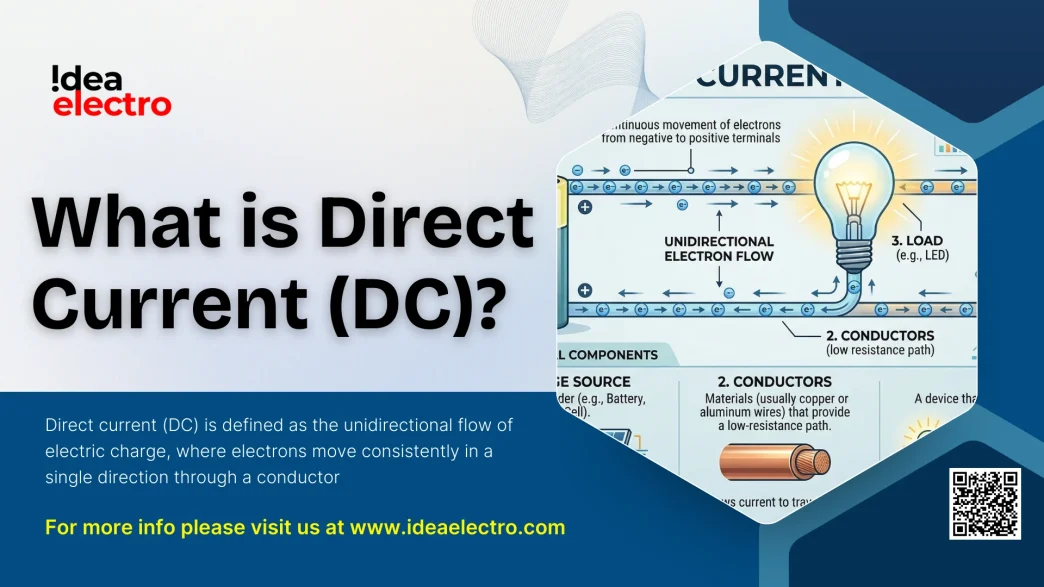
Direct current (DC) is defined as the unidirectional flow of electric charge, where electrons move consistently in a single direction through a conductor. Unlike its counterpart, alternating current, the flow of DC remains stable in polarity, typically moving from a point of higher negative potential to a point of positive potential. Historically, direct current was the primary method of power distribution during the late 19th century, championed by Thomas Edison, who established the first commercial electric power station in New York City using DC technology. While alternating current eventually became the standard for long-distance grid transmission, DC has experienced a massive resurgence in the modern era. As our global society transitions toward a battery-powered infrastructure, understanding the mechanics of DC is no longer just for engineers; it is essential for comprehending the technology that powers our portable electronics, electric vehicles, and renewable energy systems.
The underlying physics of direct current centers on a constant voltage that drives electrons through a closed loop. In a DC system, the electrical pressure remains steady, ensuring that the current does not oscillate or reverse. This behavior is governed by Ohm’s Law, which describes the relationship between voltage, current, and resistance in a circuit to function correctly, a DC circuit requires several fundamental components:
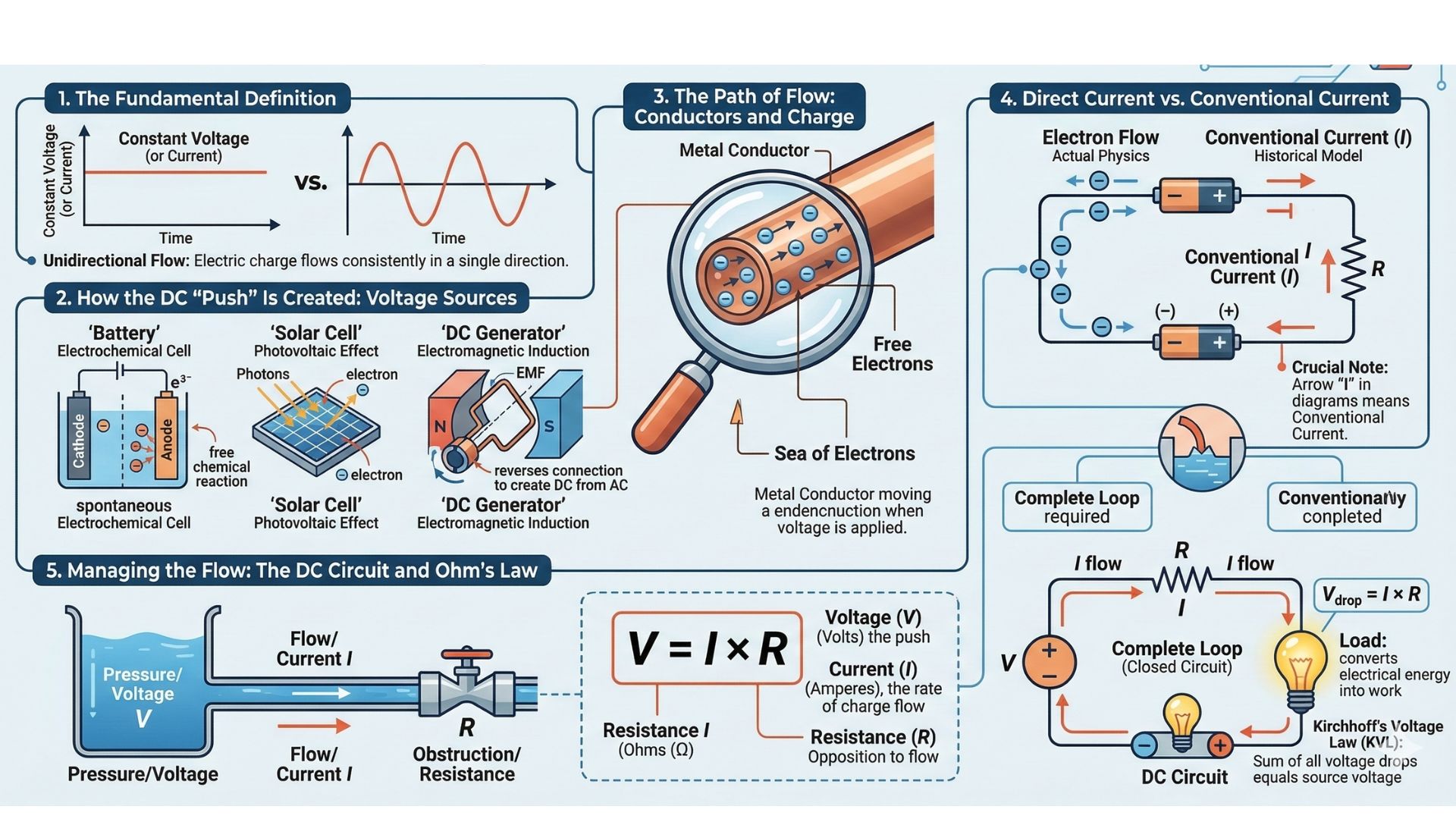
The Physics: How Direct Current Works
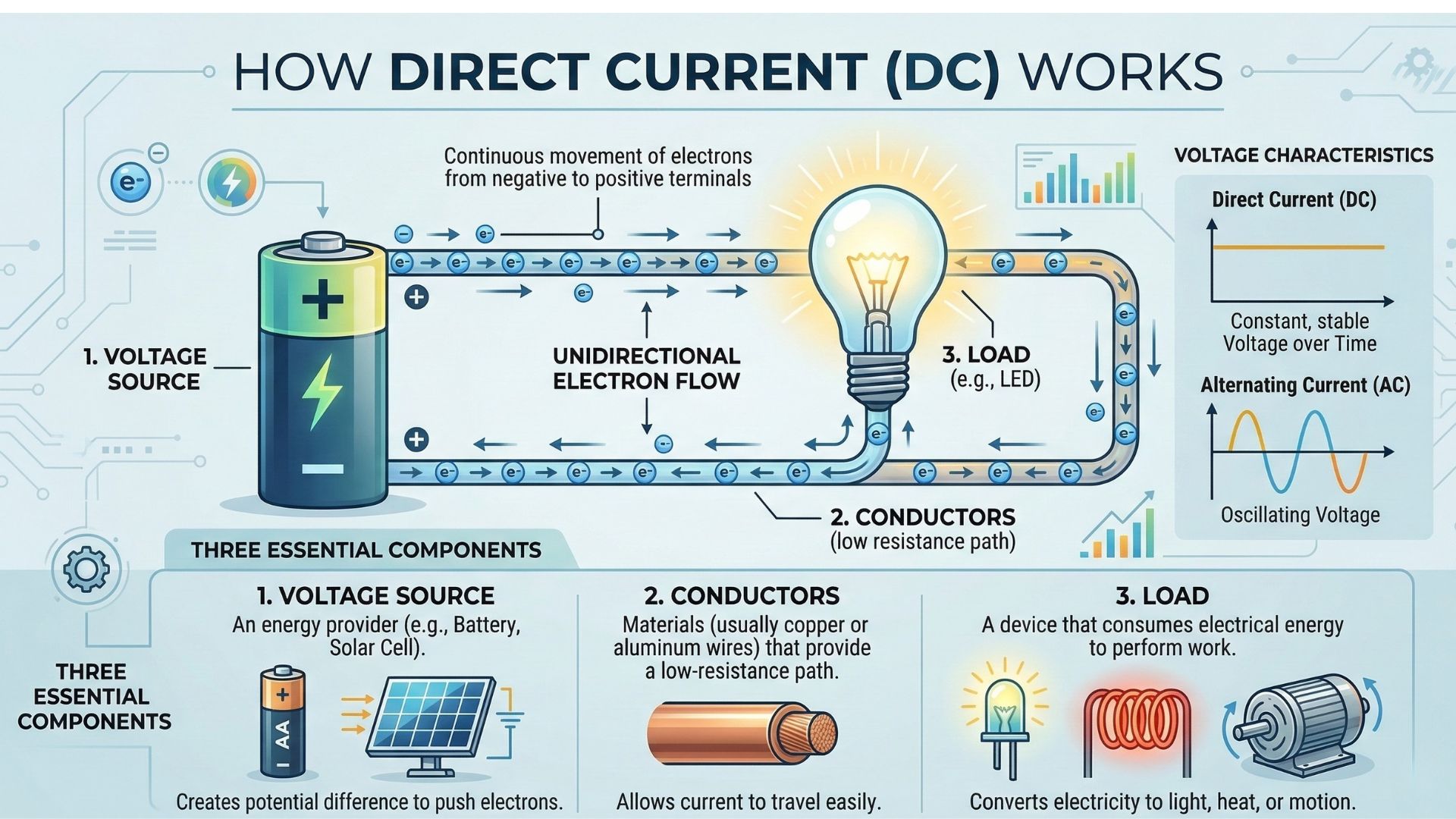
At its core, direct current involves the continuous movement of electrons from the negative terminal to the positive terminal of a voltage source. This flow creates a constant voltage level that remains stable over time, unlike the oscillating voltage found in AC systems. For a DC circuit to function properly, three essential components must be present:
- Voltage Source: An energy provider, such as a battery or solar cell, that creates the potential difference necessary to push electrons.
- Conductors: Materials, usually copper or aluminum wires, that provide a path with low resistance for the current to travel.
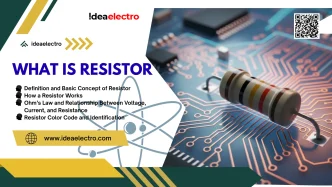
- Load: A device that consumes the electrical energy to perform work, such as a light-emitting diode (LED), a heating element, or a DC motor.
DC vs. AC (Alternating Current): Key Differences
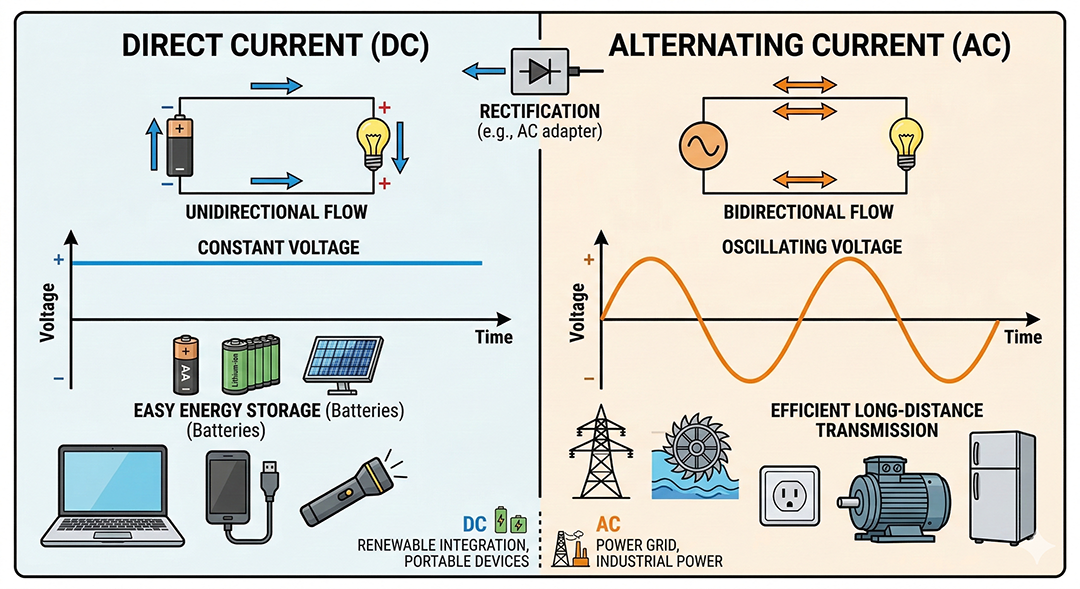
While direct current flows in a straight, unchanging path, Alternating Current (AC) functions by periodically reversing the direction of electron flow, usually following a sine wave pattern. This reversal allows AC to be easily stepped up to high voltages using transformers, which minimizes energy loss during long-distance transmission from power plants to cities. DC, by contrast, is far more difficult to transmit over long distances without significant voltage drops, though it is the superior choice for storing energy and powering sensitive electronic components. The following table highlights the primary technical distinctions between these two forms of electricity:
Comparison of DC and AC Power
| Feature | Direct Current (DC) | Alternating Current (AC) |
| Direction of Flow | Unidirectional (One direction) | Bidirectional (Reverses periodically) |
| Voltage Stability | Constant and steady | Oscillating (Sine wave) |
| Long-Distance Transmission | Historically inefficient; high voltage drop | Efficient via transformers |
| Primary Sources | Batteries, Solar Cells, Fuel Cells | Power Grids, Turbines, Generators |
| Energy Storage | Can be stored in batteries | Cannot be stored directly |
Common Sources of DC Power
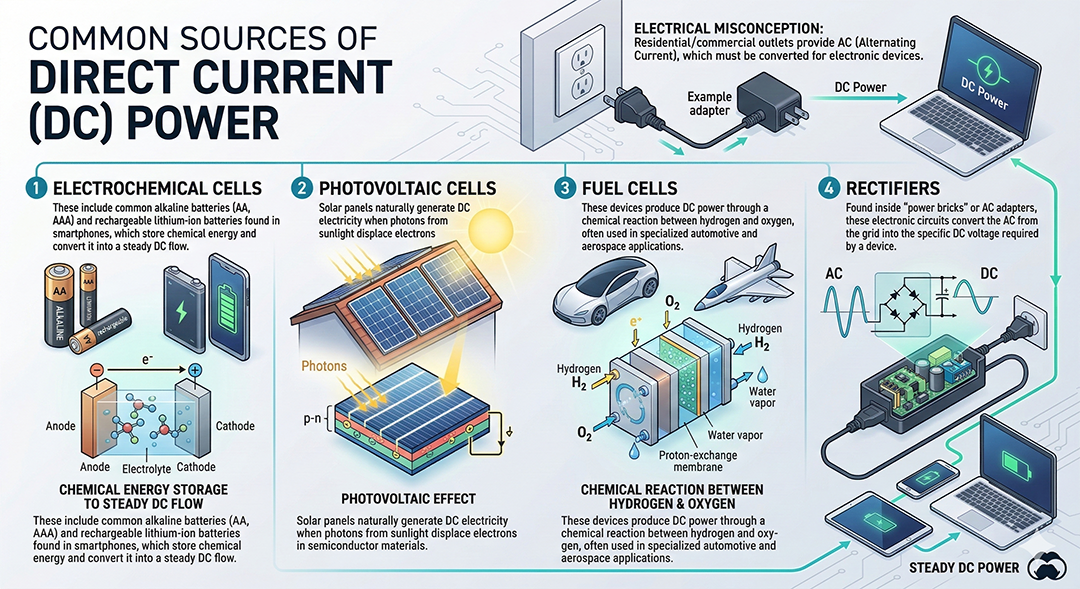
It is a common misconception that the electricity used by our devices comes directly in DC form from a wall outlet. In reality, residential and commercial outlets provide AC power, which must then be converted for use in electronics. There are several primary methods and sources for generating and storing DC power:
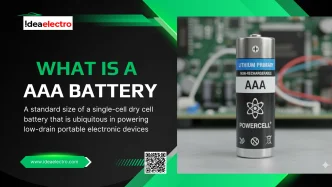
- Electrochemical Cells: These include common alkaline batteries (AA, AAA) and rechargeable lithium-ion batteries found in smartphones, which store chemical energy and convert it into a steady DC flow.
- Photovoltaic Cells: Solar panels naturally generate DC electricity when photons from sunlight displace electrons in semiconductor materials.
- Fuel Cells: These devices produce DC power through a chemical reaction between hydrogen and oxygen, often used in specialized automotive and aerospace applications.
- Rectifiers: Found inside “power bricks” or AC adapters, these electronic circuits convert the AC from the grid into the specific DC voltage required by a device.
Real-World Applications of Direct Current
The practical applications of direct current are vast, touching nearly every aspect of modern life. Because DC provides a stable and predictable flow of energy, it is the gold standard for high-precision technology and portable solutions.
- Consumer Electronics: Cell phones, laptops, tablets, flashlights, and virtually any device that runs on batteries or connects via USB relies entirely on DC power. The internal circuits of these devices are designed specifically for constant-voltage DC operation.
- Automotive Industry: Traditional vehicles use DC for their starting systems, lighting, and electronics, with the alternator actually producing AC that is immediately rectified to DC. Electric vehicles (EVs) take this further, using massive battery packs that store DC energy to power DC traction motors, and they charge from DC fast-charging stations that deliver power directly without conversion.
- Renewable Energy Systems: Solar power farms generate DC electricity that must either be converted to AC for grid feed or stored directly in battery banks. Off-grid living setups and DC microgrids increasingly use direct current throughout the home, eliminating multiple conversion losses by keeping power in its native DC form from solar panels to batteries to LED lighting.
- Data Centers and Telecommunications: Large data centers, which house cloud computing and AI processing, are shifting toward DC distribution to improve energy efficiency and reliability. Telephone exchanges traditionally use -48V DC power supplies to prevent electrolysis and ensure uninterrupted service.
In summary, direct current is the backbone of the portable and digital age. From its early origins in the “War of Currents” to its current status as the primary medium for renewable energy storage and personal computing, DC offers the stability and portability that AC cannot match. As we continue to innovate with more efficient batteries and expanded solar infrastructure, the relevance of direct current will only continue to grow, solidifying its place as a critical pillar of our global energy future.