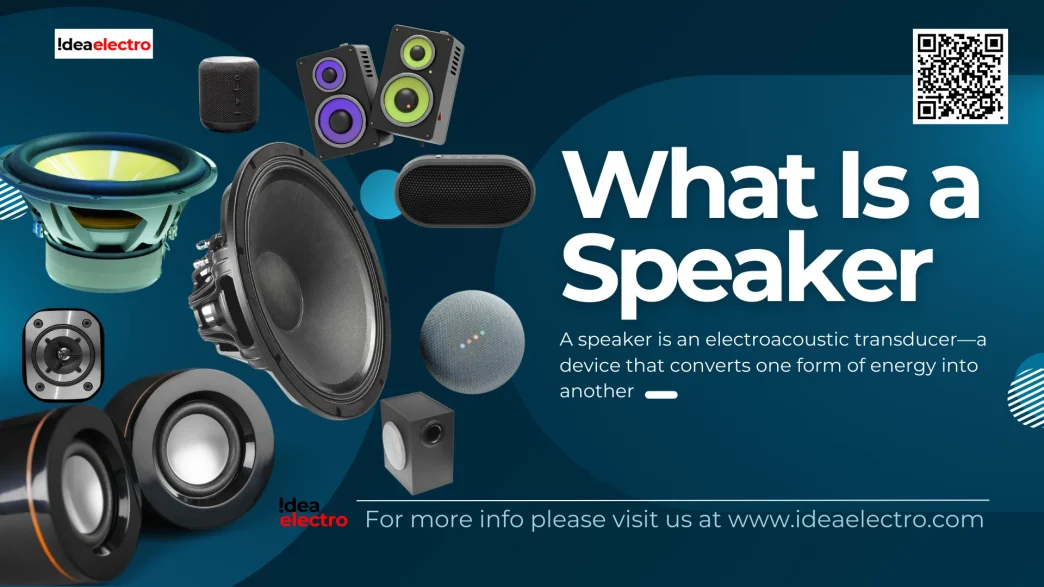
Technically, a speaker is an electroacoustic transducer—a device that converts one form of energy into another. Specifically, it transforms electrical energy from an audio signal into mechanical sound energy (sound waves). In electronic systems, it functions as a dedicated output device, tasked with the final stage of audio reproduction. It is crucial to distinguish between a sound source and the speaker itself. The sound source—be it a digital music file, a radio broadcast, or a live microphone feed—generates or carries the electrical signal. The speaker’s sole responsibility is the accurate reproduction of that signal as sound, acting as the inverse of a microphone, which converts sound into an electrical signal.
How Does a Speaker Work?
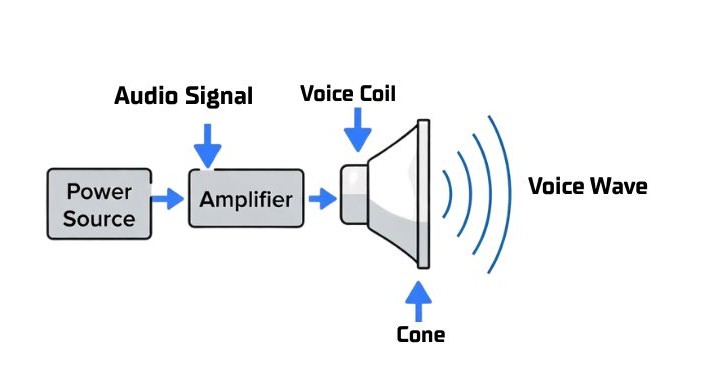
The operation of a standard dynamic speaker, the most common type, is a direct application of electromagnetism. The process follows a clear sequence where an electrical signal instigates physical movement, which in turn generates sound waves.
The core mechanism relies on the interaction between a permanent magnet and a voice coil, which is a coil of wire attached to the speaker’s diaphragm. When the alternating current (AC) of an audio signal passes through this coil, it creates a varying magnetic field around it. This induced field constantly interacts with the static field of the permanent magnet, resulting in alternating forces of attraction and repulsion. According to the principles of electromagnetic induction, these forces push and pull the voice coil back and forth with rapid precision.
- Electrical Audio Signal Input: An amplifier sends a fluctuating electrical current, representing the audio waveform, to the speaker’s terminals.
- Voice Coil and Magnet Interaction: This current turns the voice coil into a temporary electromagnet. Its changing polarity, dictated by the audio signal, causes it to be repeatedly attracted to and repelled by the permanent magnet.
- Diaphragm Movement: The voice coil is physically attached to the diaphragm (or cone). As the coil moves, it forces the diaphragm to vibrate in sync.
- Sound Wave Generation: The diaphragm’s vibrations press against and displace air molecules, creating the pressure waves that we perceive as sound. The frequency of the vibration determines the pitch, while its amplitude controls the volume.
Main Components of a Speaker
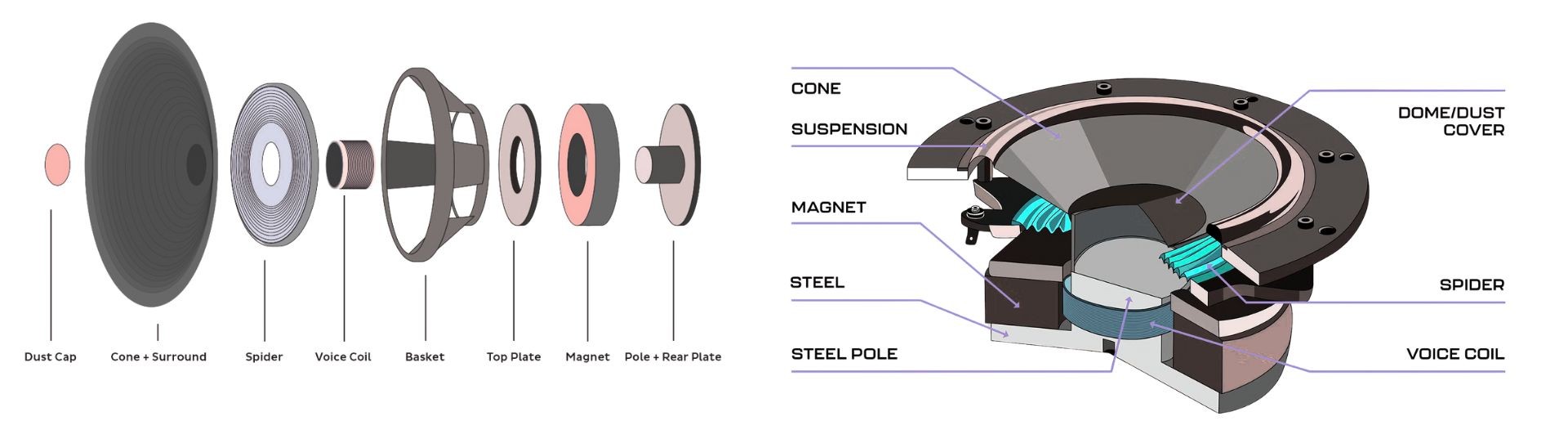
A dynamic loudspeaker is a carefully engineered assembly where each part plays a critical role in ensuring accurate sound reproduction and durability. Understanding these components reveals the intricacies behind its function.
- Diaphragm (Cone): This is the primary surface that moves air to create sound. Typically cone-shaped or dome-shaped, its material—paper, plastic, metal, or composite—significantly impacts sound characteristics, from warm tones to crisp clarity.
- Voice Coil: This is the speaker’s motor. It’s a cylindrical coil of wire (usually copper or aluminum) suspended within the magnetic gap. The electrical audio signal passes through it, creating the magnetic field that drives all motion.
- Magnet: This permanent magnet provides the constant magnetic field essential for the voice coil to react against. Its strength, determined by materials like ferrite or neodymium, directly influences the speaker’s efficiency and power handling.
- Suspension (Surround and Spider): This system governs and centers the diaphragm’s movement. The surroundis the flexible rim connecting the diaphragm’s edge to the frame. The spider is an internal corrugated component that centers the voice coil, allowing it to move linearly while preventing lateral sway.
- Frame or Basket: This rigid metal structure, often made of stamped steel or cast aluminum, houses and aligns all other components. A robust frame prevents deformation and ensures the precise alignment necessary for clean sound production.
Types of Speakers
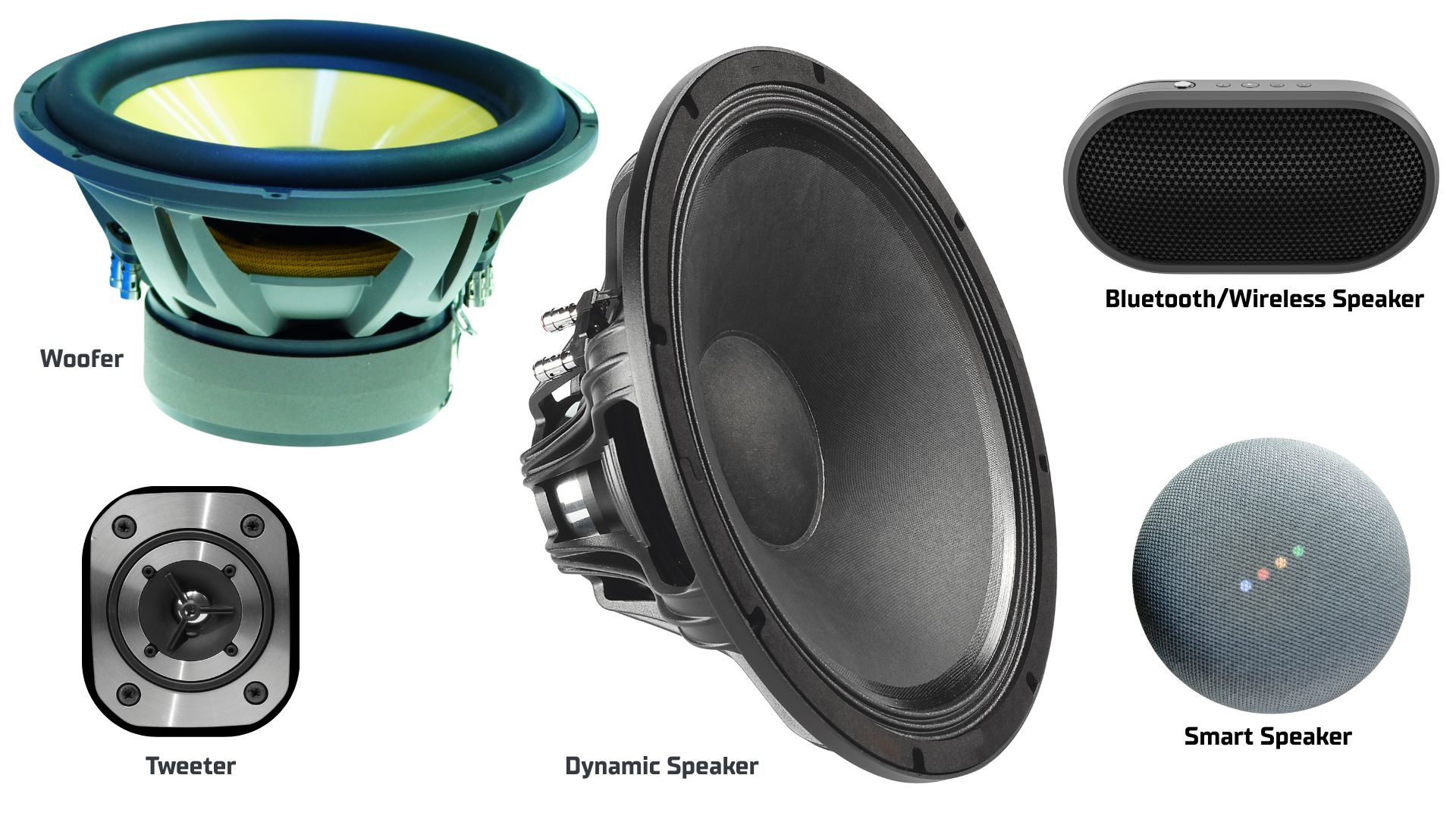
Speakers are categorized based on their design, the frequencies they reproduce, and their application. A single audio system often combines multiple types to cover the full audible spectrum effectively. The following table outlines common speaker categories found in consumer and professional electronics.
| Speaker Type | Description | Common Uses |
| Dynamic Speaker | The most common type; uses electromagnetic induction with a voice coil and permanent magnet to drive a diaphragm. | Home audio, TVs, car speakers, PA systems. |
| Tweeter | A small driver designed to vibrate very quickly, specializing in reproducing high-frequency sounds (treble). | Hi-fi systems, home theaters (for cymbals, vocal sibilance). |
| Woofer | A larger driver designed to move more air slowly, specializing in low-frequency sounds (bass). A very large woofer is often called a subwoofer. | Stereo systems, subwoofers for home theater. |
| Bluetooth/Wireless Speaker | A complete, portable sound system with built-in amplification and wireless reception via Bluetooth or Wi-Fi. | Portable audio for personal and outdoor use. |
| Smart Speaker | A wireless speaker integrated with voice assistant technology and smart home connectivity. | Smart homes for voice-controlled music, information, and device control. |
Active vs Passive Speakers
A fundamental distinction in speaker systems is whether they contain their own amplifier. Active (or powered) speakers have a built-in amplifier, making them a complete, self-contained unit. They simply need a power source and an audio signal (via cable or wirelessly) to function, offering a convenient plug-and-play solution. Conversely, passive speakers lack an internal amplifier and must be connected to an external amplifier or receiver via speaker wire. They draw both power and the audio signal from this external source. Active speakers are favored for simplicity and compact setups (e.g., desktop monitors, portable systems), while passive speakers offer greater customization for hi-fi enthusiasts who wish to mix and match separate amplifiers and components.
Applications of Speakers
The utility of speakers extends far beyond simple music playback, permeating nearly every facet of modern technology and public life.
- Mobile phones and tabletsfor personal media and communication.
- Television and home theater systemsfor immersive entertainment.
- Computers and gaming systemsfor interactive audio feedback and immersion.
- Public address systemsfor announcements in venues like schools, airports, and at live events.
- Automobilesfor in-vehicle infotainment and communication.
Speakers are the fundamental interface for audible information output. They are essential for converting stored or transmitted electronic data into an experience we can directly perceive, thereby enabling modern mass communication, entertainment, and even critical safety alerts.
Advantages and Limitations of Speakers
As a technology, speakers offer remarkable utility but are subject to physical and engineering constraints.
Advantages:
- They successfully convert electronic signals into audible sound, enabling the playback of any recorded or transmitted audio.
- They come in a wide range of sizes, power ratings, and designs, making them suitable for applications from miniature earbuds to stadium concert systems.
- They are foundational to both entertainment (music, movies) and critical communication(public announcements, telephony, alarms).
Limitations:
- All speakers can suffer from distortionwhen driven beyond their mechanical or thermal limits, especially at high volumes.
- There is a physical trade-off between size and frequency response. Small speakers struggle to produce deep bass frequencies, while a single large driver cannot accurately reproduce the highest treble tones, which is why multi-driver systems are common.
Conclusion
In summary, a speaker is an elegant electromechanical transducer that harnesses the principles of electromagnetism to convert electrical audio signals into the sound waves we hear. Its core components—the magnet, voice coil, and diaphragm—work in concert to translate precise electrical fluctuations into physical air movement. From the compact driver in a smartphone to the sophisticated multi-driver system in a home theater, speakers in their various forms are indispensable output devices in our electronic world. Choosing the right speaker ultimately depends on understanding these fundamental principles and matching them to the specific needs of the application, whether it demands portability, high-fidelity sound, or powerful public address capabilities.