

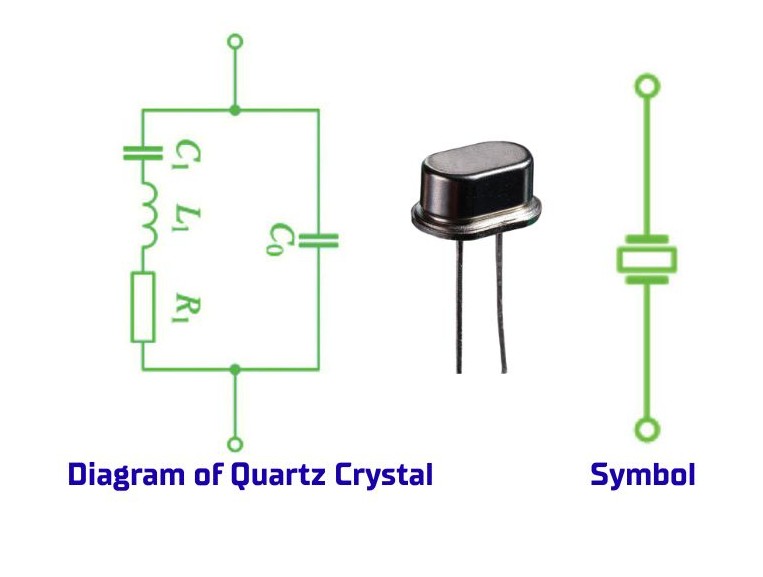
Technically, a crystal oscillator is an electronic oscillator circuit that uses the mechanical resonance of a vibrating piezoelectric crystal to create an electrical signal with a very precise frequency. The most common material used is quartz crystal. When an electric field is applied, the quartz physically deforms; when the field is removed, it springs back and generates an electric field of its own, a property known as the piezoelectric effect. It is important to distinguish between a “crystal” and a “crystal oscillator.” A crystal (or piezoelectric resonator) is the quartz component itself, while a crystal oscillator refers to the complete circuit that includes the crystal, an amplifier, and other components to generate and sustain the oscillation.
Introduction to Crystal Oscillator
A crystal oscillator is a foundational electronic circuit that generates a precise and stable clock signal, acting as the reliable heartbeat for countless modern devices. Its importance stems from its ability to provide accurate timing and synchronization, which is essential for the proper function of digital systems. Without this stable frequency reference, coordinated operations within circuits would falter. For example, the consistent ticking of a quartz watch, the smooth operation of a smartphone’s processor, and the accurate timing within a computer’s motherboard all depend on the steady signal produced by a crystal oscillator. These components are ubiquitous, with billions produced annually to meet global demand.
How a Crystal Oscillator Works
The operation of a crystal oscillator is based on the piezoelectric effect. The process follows a consistent cycle that converts electrical energy into mechanical vibration and back again.
- Electrical Signal Application: When an alternating voltage is applied to electrodes on the quartz crystal, it causes the crystal to mechanically deform.
- Mechanical Vibration: This deformation causes the crystal to vibrate at its inherent natural resonant frequency, which is determined by its physical size, shape, and cut.
- Resonant Frequency Generation: The vibrating crystal then generates a small AC voltage at this same resonant frequency through the piezoelectric effect. This signal is fed back into the circuit.
- Stable Output: An amplifier in the circuit compensates for energy losses, and the feedback network ensures the vibrations are sustained. The result is a persistent, highly stable output frequency
Key Components of a Crystal Oscillator Circuit
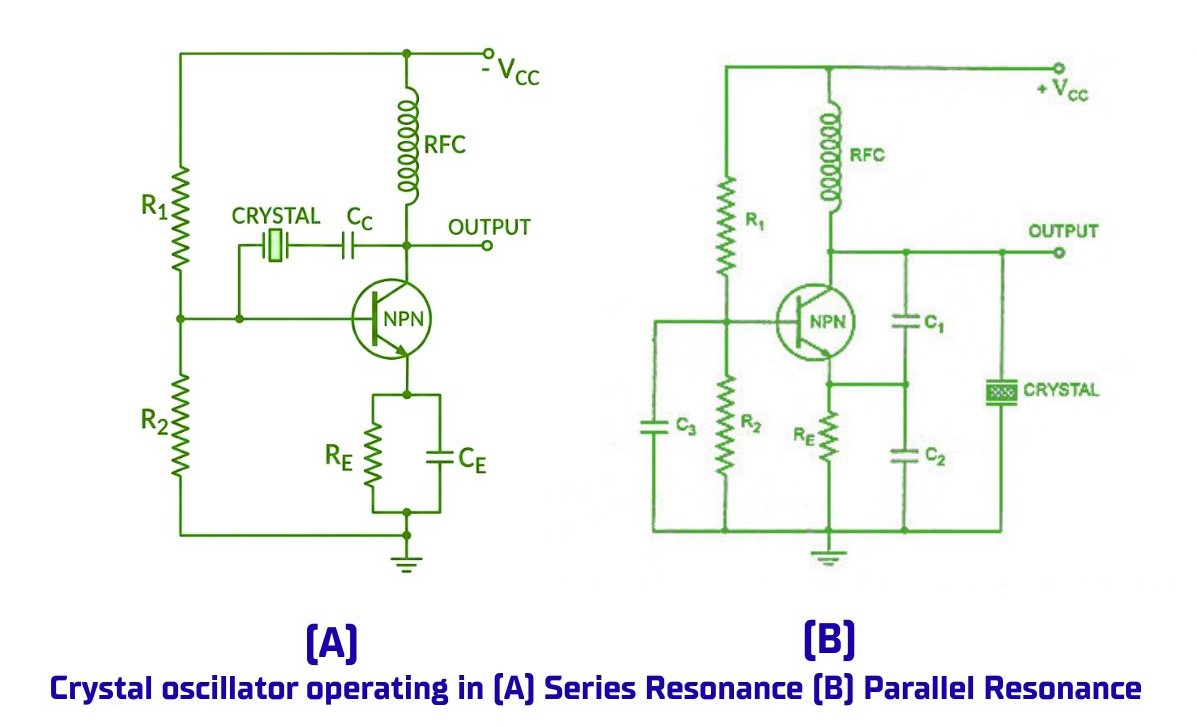
A functional crystal oscillator circuit requires several key components working in tandem:
- Quartz Crystal: The frequency-determining element that vibrates mechanically.
- Amplifier: An active device (like a transistor) that provides the gain to overcome circuit losses and sustain oscillation.
- Feedback Network: Routes a portion of the output signal back to the input to maintain oscillations.
- Load Capacitance: External capacitors that help set the precise operating frequency point and ensure stable startup conditions.
Together, these components form a loop. The amplifier drives the crystal, the crystal’s vibration provides the frequency-stable feedback signal, and the feedback network and load capacitors condition the signal to maintain consistent, reliable oscillation at the desired frequency.
Types of Crystal Oscillators
Different applications require different levels of precision and stability, leading to the development of several specialized types of crystal oscillators:
- SPXO (Simple Packaged Crystal Oscillator): The basic type with no additional compensation for temperature or voltage changes. It offers good stability at low cost for standard applications.
- TCXO (Temperature-Compensated Crystal Oscillator): Contains a compensation circuit that adjusts the frequency to counteract changes caused by ambient temperature variations. It provides significantly improved stability (e.g., ±0.2 to ±2.0 ppm) over an SPXO.
- OCXO (Oven-Controlled Crystal Oscillator): Houses the crystal in a miniature, temperature-controlled oven. This maintains the crystal at a constant high temperature, making it immune to external ambient changes. OCXOs offer the highest frequency stability (e.g., ±1 x 10⁻⁸ or better) but consume more power and are more expensive.
- VCXO (Voltage-Controlled Crystal Oscillator): Allows the output frequency to be tuned within a small range by applying an external control voltage. This is useful for phase-locked loops (PLLs) and frequency modulation.
Common Crystal Oscillator Frequencies
Crystal oscillators are manufactured for a vast range of frequencies. Specific frequencies become standard because they align well with common electronic system requirements, such as binary division for clocks or standard communication baud rates. The following table lists a few ubiquitous examples:
| Frequency | Common Application |
| 32.768 kHz | Real-Time Clocks (RTCs), Watches |
| 8 MHz | Microcontrollers |
| 16 MHz | Arduino boards |
| 20 MHz | Embedded Systems |
The 32.768 kHz frequency is particularly notable because it is a power of two (2¹⁵) and can be easily divided down by digital circuits to produce an exact 1 Hz pulse to drive a clock second hand.
Applications of Crystal Oscillators
The exceptional stability of crystal oscillators makes them indispensable across electronics:
- Microcontrollers and Microprocessors: Providing the critical clock signal that sequences every operation.
- Computers and Laptops: Synchronizing data transfer across the motherboard, CPU, and peripherals.
- Mobile Phones and Communication Systems: Generating the precise carrier frequencies for transmitting and receiving signals in radios, cellular networks, and GPS receivers.
- Clocks and Watches: Serving as the primary timebase in quartz timepieces.
In all these applications, frequency stability is paramount. It ensures accurate timing, reliable data synchronization, and clear communication without interference.
Advantages of Crystal Oscillators
- High Frequency Stability and Low Drift: Their resonant frequency remains extremely constant over time and under varying conditions.
- Exceptional Accuracy: Enables precision timing measured in parts per million (ppm).
- High Quality (Q) Factor: This indicates very low energy loss per oscillation cycle, leading to efficient operation and spectral purity.
- Cost-Effectiveness and Compact Size: They provide high performance at a relatively low cost and in small packages.
Limitations of Crystal Oscillators
- Limited Frequency Adjustment: The output frequency is fixed at manufacture and can only be tuned within a very narrow range.
- Environmental Sensitivity: Performance can be affected by extreme temperature changesand physical vibration, though specialized types (TCXO, OCXO) mitigate this.
- Physical Fragility: The quartz crystal can be more susceptible to shock and damage compared to fully electronic oscillators.
Crystal Oscillator vs RC Oscillator
When choosing a timing solution, designers often compare crystal oscillators to simpler RC (Resistor-Capacitor) oscillators. The key differences are summarized below:
| Feature | Crystal Oscillator | RC Oscillator |
| Accuracy & Stability | Very High | Low |
| Frequency Drift | Minimal | High |
| Cost | Medium | Very Low |
| Power Consumption | Typically Higher | Very Low |
In summary, crystal oscillators are chosen for precision, where timing accuracy is critical. RC oscillators are used for cost-sensitive, non-critical applications where some frequency variation is acceptable, or for initial microcontroller startup due to their simplicity and low power draw.
How to Choose the Right Crystal Oscillator
Selecting the appropriate oscillator involves evaluating your project’s specific needs against key parameters:
- Required Frequency and Stability: Determine the base frequency and the allowable deviation (in ppm).
- Operating Environment: Consider the temperature rangeand potential for vibration to decide if a basic SPXO or a compensated TCXO/OCXO is needed.
- Power Consumption: Critical for battery-powered devices; OCXOs are less suitable here.
- Application Type: Consumer, industrial, automotive, or aerospace applications have differing reliability and precision standards.
- Cost and Size Constraints: Balance performance requirements with budget and physical space on the circuit board.
Conclusion
In essence, a crystal oscillator is a marvel of engineering that transforms the stable mechanical vibration of a quartz crystal into an equally stable electrical clock signal. Its role as the precise heartbeat of electronic systems cannot be overstated, underpinning the functionality of everything from everyday gadgets to advanced communication and research equipment. For beginners and hobbyists, understanding this component is a fundamental step toward grasping how digital devices maintain order, synchronize operations, and achieve the reliability we often take for granted in modern technology.