
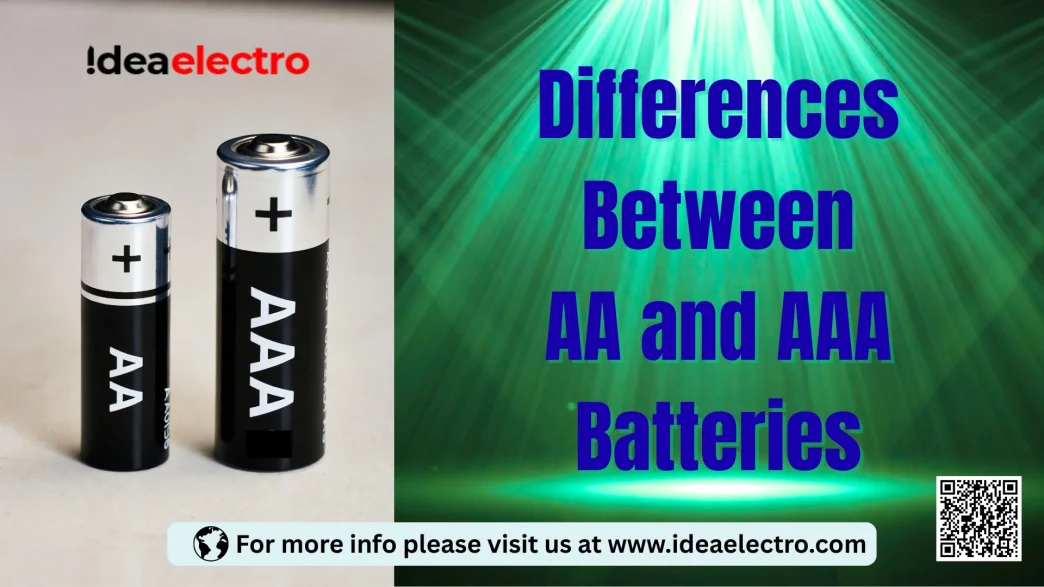
AA and AAA batteries are standardized cylindrical cells that provide power to a vast array of portable, low- to medium-drain electronic devices. They are available as single-use (primary) batteries, typically with an alkaline chemistry, and as rechargeable (secondary) batteries, most commonly nickel-metal hydride (NiMH). The designations “AA” and “AAA” are defined by international standards set by bodies like the International Electrotechnical Commission (IEC) and the American National Standards Institute (ANSI), which ensure consistency in size and voltage across manufacturers.
- AA Batteries: Larger in size, these batteries offer greater energy capacity and are the preferred choice for devices with medium to high power demands.
- AAA Batteries: Smaller and more compact, these batteries have lower capacity and are engineered for small, low-drain devices where saving space is a priority.
- Standardization: Both follow strict IEC and ANSI specifications for dimensions and nominal voltage, guaranteeing they will fit and function in devices designed for them.
Physical Differences Between AA and AAA Batteries
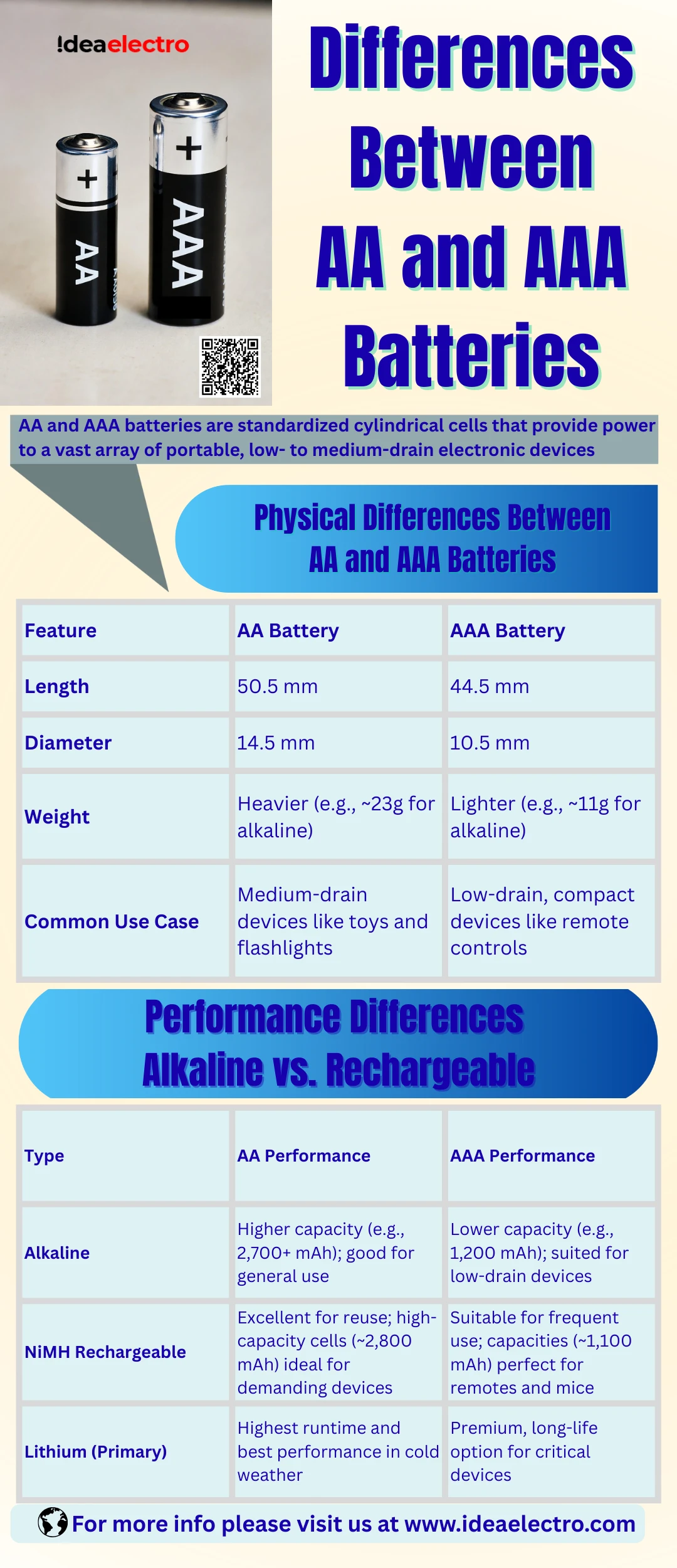
The most apparent distinction between AA and AAA batteries is their physical size. This difference in volume is the primary reason for their varying energy capacities and directly dictates which devices they can power. The standardized dimensions for these batteries are well-documented.
The table below summarizes their key physical characteristics:
| Feature | AA Battery | AAA Battery |
| Length | 50.5 mm | 44.5 mm |
| Diameter | 14.5 mm | 10.5 mm |
| Weight | Heavier (e.g., ~23g for alkaline) | Lighter (e.g., ~11g for alkaline) |
| Common Use Case | Medium-drain devices like toys and flashlights | Low-drain, compact devices like remote controls |
Capacity and Power Output Differences
The larger physical size of the AA battery allows it to hold more active chemical material, which directly translates to a higher energy capacity, measured in milliampere-hours (mAh). Capacity is a key indicator of how long a battery can power a device before needing replacement or recharge.
- AA Capacity: Typical capacities range from approximately 1,800 to 3,000 mAhfor alkaline types, with high-performance NiMH rechargeable cells reaching up to 2,800 mAh or more. Some advanced lithium-based AA batteries claim capacities up to 3,400 mAh.
- AAA Capacity: These have a lower capacity, generally between 800 and 1,200 mAhfor alkaline and standard NiMH variants.
- Runtime Impact: In practical terms, a higher mAh rating means a longer usage time. For example, if the same device could fit both, an AA battery would last significantly longer than an AAA battery because it contains more total energy.
Furthermore, AA batteries can typically deliver higher currents (1.5–2 A) compared to AAA batteries (0.5–1 A), making them suitable for devices that require brief surges of power.
Applications: Where Are They Commonly Used?
Manufacturers select a battery type based on a careful balance between the device’s physical design, its energy requirements, and the desired runtime between battery changes. The larger AA battery is reserved for devices that need more sustained power or have ample space in their compartment.
Devices commonly using AA batteries include:
- Digital cameras and portable gaming consoles
- Children’s toys and remote-controlled cars
- Standard flashlights and some emergency equipment
- Portable radios and electric shavers
Devices commonly using AAA batteries include:
- TV remotes, wireless keyboards, and computer mice
- Compact flashlights and laser pointers
- Digital thermometers, glucose monitors, and other small medical devices
- Small electronic gadgets like Bluetooth headsets and fitness trackers
Performance Differences: Alkaline vs. Rechargeable
Beyond size, the chemical composition of a battery is a major factor in its performance, cost, and environmental impact. The main choice for consumers is between disposable alkaline and rechargeable NiMH or lithium-ion cells.
- Alkaline (Disposable): These are inexpensive upfront, have a long shelf life (up to 10 years for AA), and are widely available. However, they are designed for single use, generating more waste and becoming costly over time.
- NiMH Rechargeable: They have a higher initial cost but can be recharged hundreds of times—often over 1,000 cycles for quality cells—offering substantial long-term savings and reducing environmental waste. They maintain a stable 1.2V output for most of their discharge cycle.
- Lithium (Primary & Rechargeable): Disposable lithium batteries (like LiFeS2) offer the highest capacity, exceptional shelf life, and superior performance in extreme temperatures. Newer rechargeable lithium-ion AA/AAA batteries provide a constant 1.5V output (unlike the 1.2V of NiMH) and are excellent for high-drain devices, though they require a special charger.
The following table illustrates how these chemistries perform in different form factors:
| Type | AA Performance | AAA Performance |
| Alkaline | Higher capacity (e.g., 2,700+ mAh); good for general use | Lower capacity (e.g., 1,200 mAh); suited for low-drain devices |
| NiMH Rechargeable | Excellent for reuse; high-capacity cells (~2,800 mAh) ideal for demanding devices | Suitable for frequent use; capacities (~1,100 mAh) perfect for remotes and mice |
| Lithium (Primary) | Highest runtime and best performance in cold weather | Premium, long-life option for critical devices |
Cost Comparison and Safety Considerations
Cost Comparison: While AAA batteries are sometimes slightly cheaper per unit, their lower capacity can make them less economical for devices that drain power quickly, as they require more frequent replacement. AA batteries have a higher per-unit cost but offer a lower cost-per-use in medium-drain applications due to their longer life. The most significant economic and environmental benefit comes from investing in rechargeable batteries and a charger for devices used regularly, as they pay for themselves after a modest number of recharge cycles.
Safety Considerations: Safe battery handling is essential to prevent damage to devices and avoid hazards.
- Never force batteriesof the wrong size into a compartment.
- Do not mix old and new batteriesor batteries of different chemistries/brands in the same device.
- Store batteriesin a cool, dry place and remove them from devices that will not be used for an extended period.
- Only recharge batteriesexplicitly marked as “rechargeable”; attempting to charge alkaline cells can cause leakage or rupture.
Summary and Conclusion
In summary, the choice between AA and AAA batteries is dictated by a clear set of physical and electrical parameters:
- Size & Weight: AA is larger and heavier; AAA is compact and light.
- Capacity & Runtime: AA offers significantly higher capacity (mAh) for longer device operation.
- Common Usage: AA powers medium- to high-drain devices; AAA is for low-drain, space-constrained electronics.
- Cost: Rechargeable variants of both sizes provide the best long-term value and environmental benefit.
Selecting the correct battery type is a simple yet critical decision that directly impacts the performance, reliability, and cost-efficiency of your electronic devices. By understanding these fundamental differences—primarily that AA batteries provide more energy for bigger jobs, while AAA batteries enable compact, portable design—you can ensure your devices function as intended and make more informed, economical power choices